Search

Windsbird: Footprints around the world

Hong Kong edition

‘Where the hell am I?’ Panic kicks in as soon as the bus from As-Salt drops me off at this unfamiliar place. I have asked for the North Bus Station but they tell me to get off here. “Tababour? (North Bus Station?)” I ask again helplessly but they point to the left and drive off. Presumably the bus station is towards the left, but I didn’t want to risk crossing the wide road and try to reach there on foot. How do I know  how far I would end up walking?

I get a taxi and ask for Tababour, and it turns out it’s only 3 minutes away from where I was originally dropped. So I  show the driver a piece of paper with my hostel  details, including it’s address in Arabic and a map. The hostel is near the Roman Amphitheatre which is one of the major tourist attractions in Amman, but surprisingly he isn’t the first driver who gives a puzzled look at the hostel’s whereabouts. After examining the map for sometime, he gets out his mobile phone and calls the hostel for directions.

On my journey back to hostel in the taxi I ask him how much the fare would be, with the knowledge that it should be around 3JD or below. “5 JD”, he says, and as I protest, he talks in Arabic and points to his phone. I insist on 3 JD but he’s adamant, and continues to point to his phone. I think he’s trying to charge me for the phone call he made earlier. “5 JD FOR A PHONE CALL!! I’m not paying that much! Drop me here and I’ll get another cab!” I quickly flare up and raise my voice. Apparently the fiery temper of Jordanians has already rubbed off on me. I’ve just surprised myself at this burst of uncharacteristic temper, but it is liberating to give an immediate external response to my feelings rather than suppressing it in my usual way.

The driver drives on, as if he hasn’t heard my shouts at all. It confuses me a little and makes me wonder if I had misunderstood him in any way. And I feel a little silly for getting fired up. When we reach the hostel, the meter on the taxi says the journey costs 4 JD. I hand him over a 5 JD note and hold out my palm for a change, but he pulls a ‘baby face’ with his lips pouting and holds up his index finger – ‘It’s only 1JD. Please let me keep it’, he seems to say. It is as if a child is pleading for one more piece of candy, and I get out of the taxi 1 JD poorer but laughing heartily.

DAY 4: 21 September 2013, On the way back from As-Salt

Tomb of Job, Joshua and Jethro

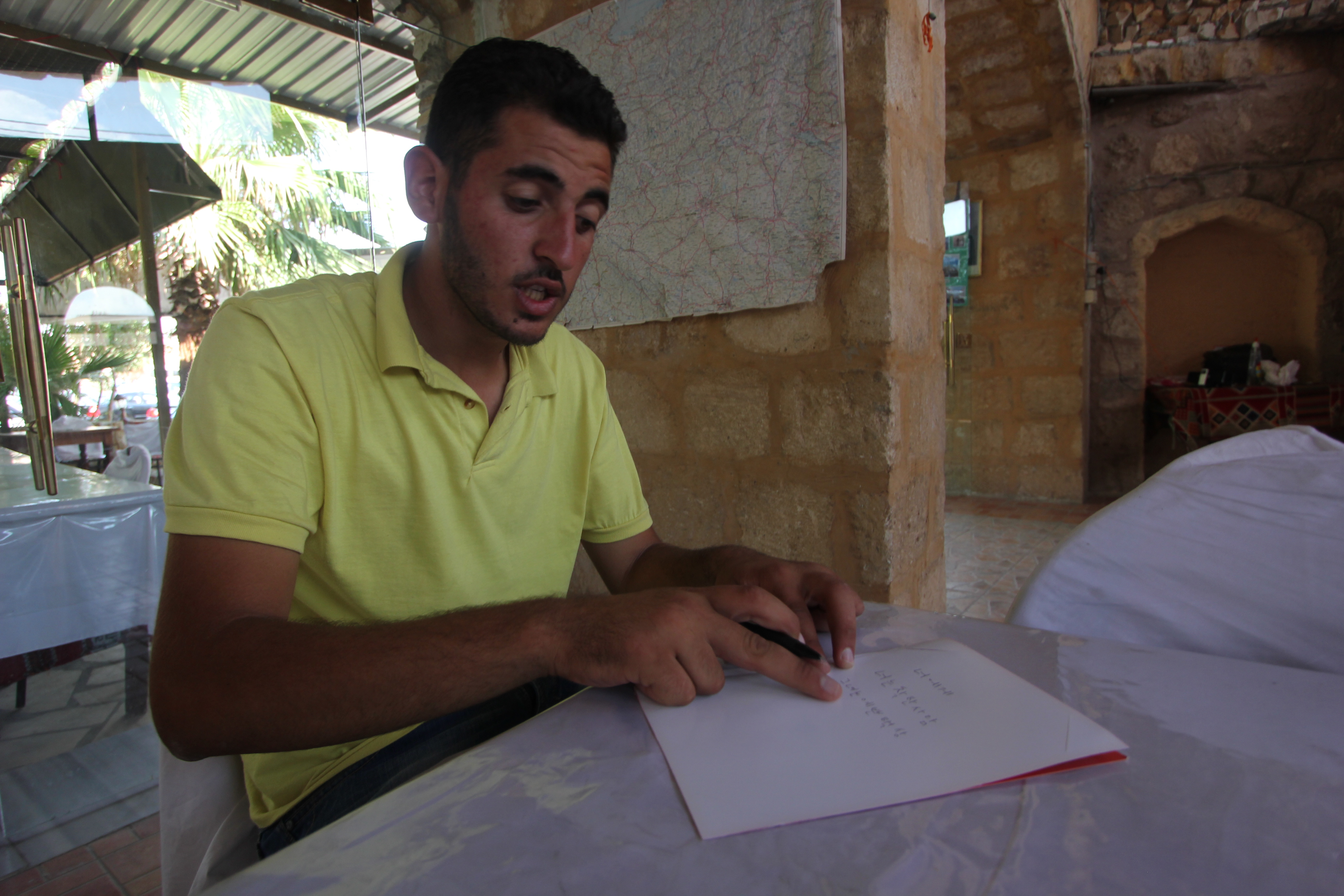
I am so, so proud of this small piece of paper that I prepared  before setting off to As-Salt. The name of the Biblical figures that are allegedly buried in the town are all written here in Arabic – the product of my pestering of the hostel manager and his of phone calls to find out the Arab-equivalent of the English names. It had been my sole means of communication/navigation in As-Salt where practically nobody could speak English.

I take out this carefully folded paper and show it to Auntie and her girls, and they grab passers-by and ask for me. They look and think for a while, and grab some other passers-by and show them the paper. This repeats for a while and soon a handful of men and women are hurdled together in a circle, heads bent down for a better view and fingers pointing towards the paper in the middle – the paper that is the  nucleus of their debates and exchange of ideas.

After 10 minutes or so, they spot a taxi and put me in the car.  I had imagined the tombs would be in the town, as obscurely located they may be  – but the taxi drives up and down a couple of hills and we are soon out of As-Salt. There was no way I could have found these places by myself let alone reach there – they are all at least 15 minutes away from each other by a car and most of them are kept in mosques hidden away from the general public.

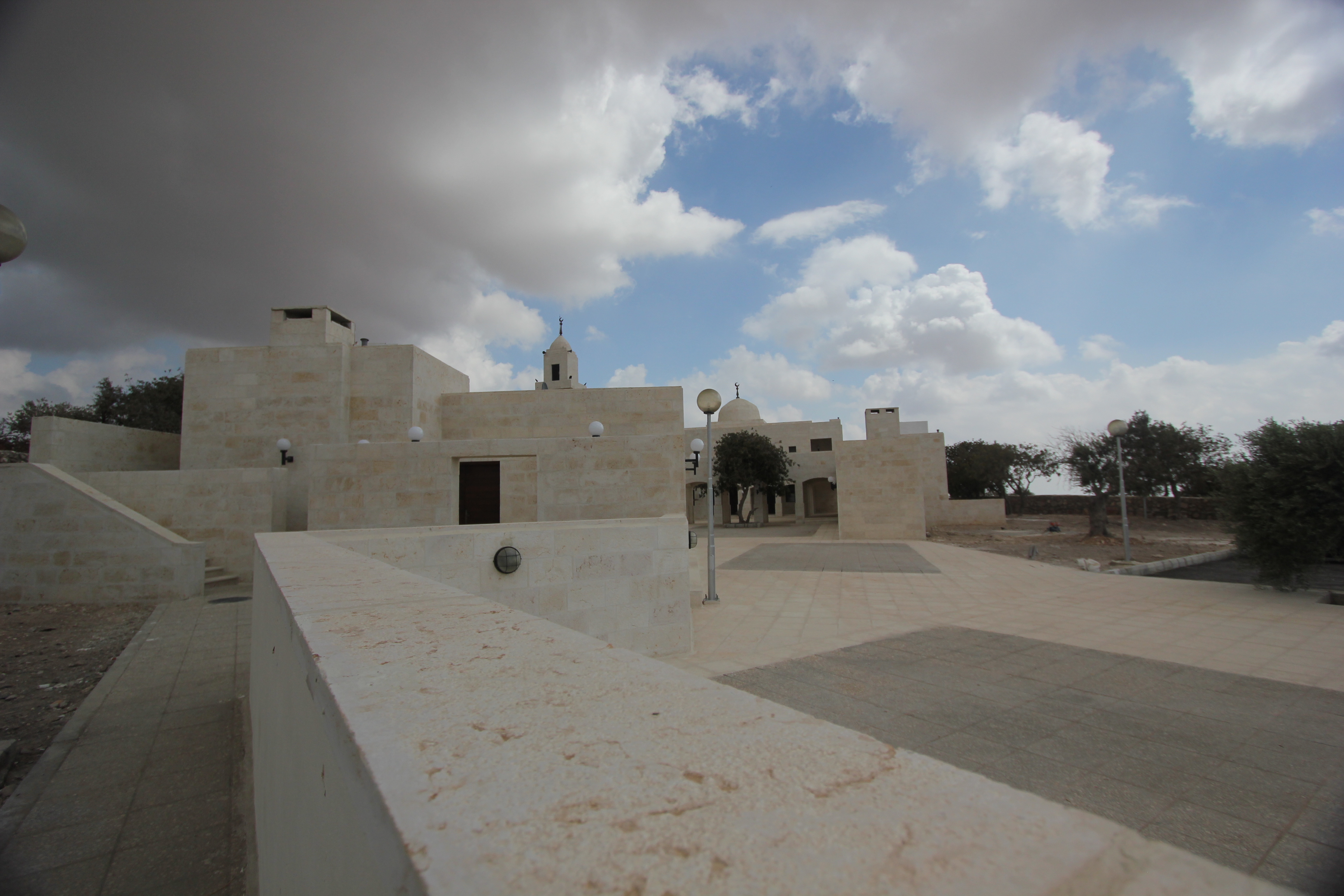
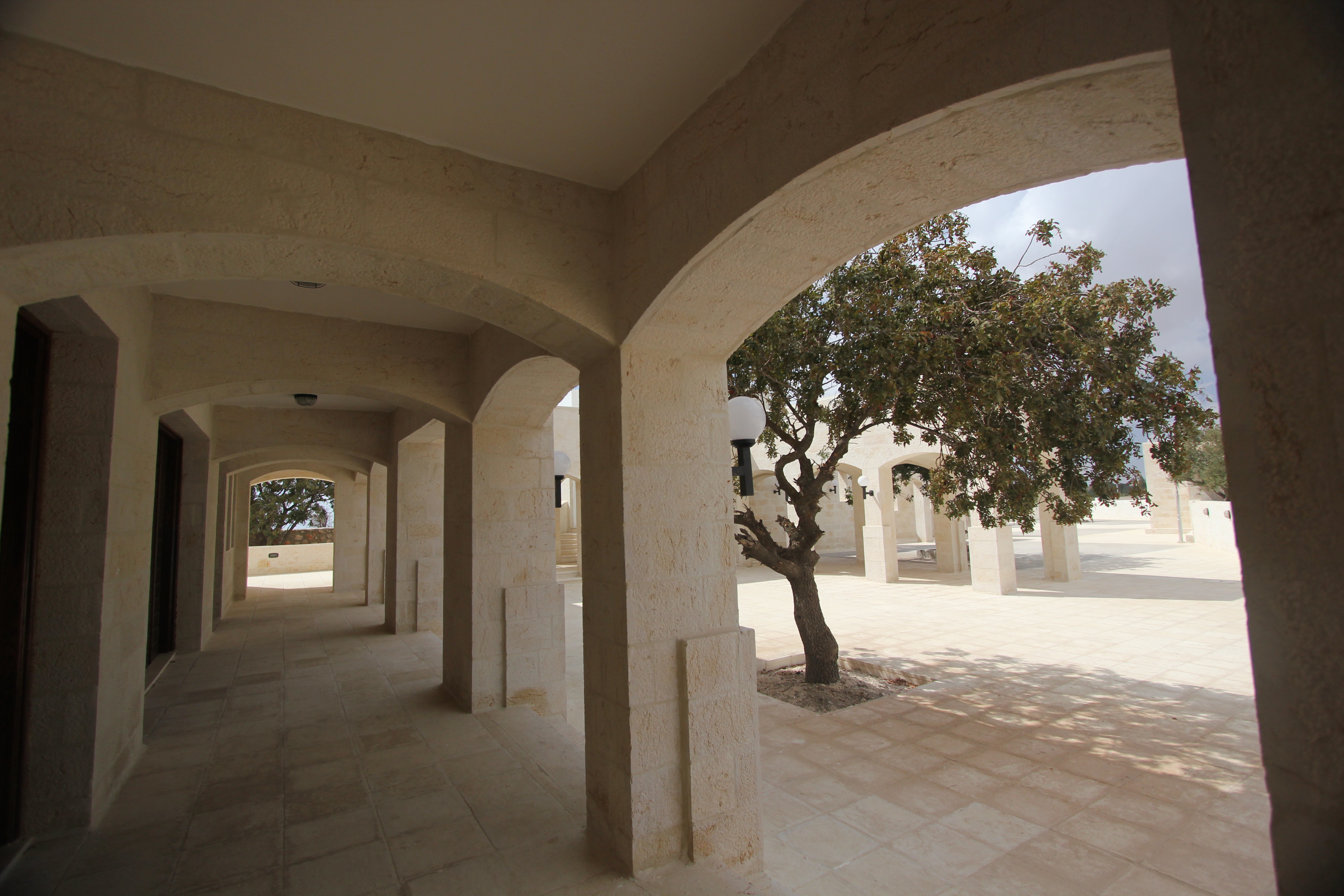
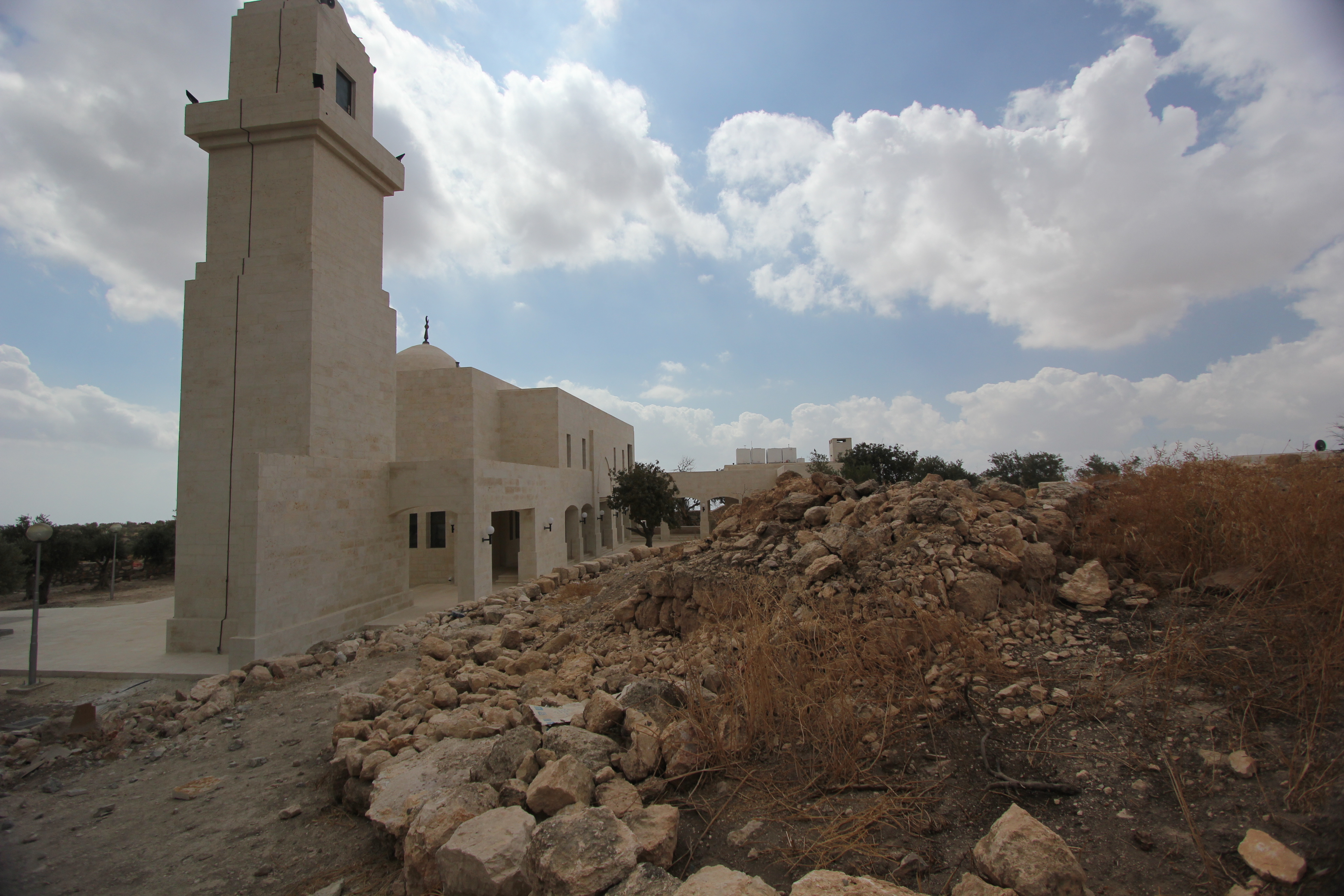
Yes, they were in mosques. Not tombstones in a graveyard in an open field, but Muslim mosques. Apparently, Joshua and Jethro are considered as holy prophets in Islam, but I had not known that. I stand at the gate of the first  mosque we reach, blushing at my inappropriate attire revealing my bare arms and calf. Thankfully, the taxi driver fetches me two pieces of women’s garment from inside and gestures me to put them on. They are simple cotton with flower patterns all over,  with elastic band around its hem so that they can fit on the waist or  around the face.

I am entering a mosque for the first time in my life, wrapped around in these makeshift covers. The elastic band pulls the fabric and makes them puffy, and I feel like a decorated potato sack. Covering my entire body  immediately affects my posture, making me walk more discretely and quietly. It’s interesting how a simple covering can shift how I feel about myself and how I interact with the surroundings. Each tombs are a couple of metres long, covered with decorative cloaks. There’s always someone praying at the holy shrine, or a preacher teaching to a group of people.

On our way to each mosques, we talk with gestures. Simple words accompany the hand signs but they do not add much significance to our communication as neither of us hardly speak a word of each other’s language. Naturally, it takes on average of 10 minutes to understand the meaning of a single sentence.

Driver: Ayyub, Yusha, Shuayb – Muslim. (Job, Joshua, Jethro are Muslim prophets)

Me: You, Muslim. I, Christian.

The driver looks puzzled at the word ‘Christian’ so I try again. 

Me: (With the gesture of praying) You, Allah. Me, Jesus.

Driver: Messihi.

Me: Messihi?

Driver: Me, Muslim. You Messihi.

Messihi. I instantly like the word which I understand it to mean ‘a Christian’. Perhaps it derives from the word Messiah (meaning ‘saviour’) and ‘Messihi’ feels like a word that beautifully summarises what we Christians are: the follower of our saviour.

After we have seen the tomb of Joshua (he succeeded the role of Moses and led the Israelites to the Promised Land in the Bible), the driver lets me drink water in the mosque which seems to be the spring water from the ground. I smile broadly and take another refreshing sip, as the he gaily tells me that I am drinking the very water Joshua have drunk.

Tomb of Job
Shrine of Joshua
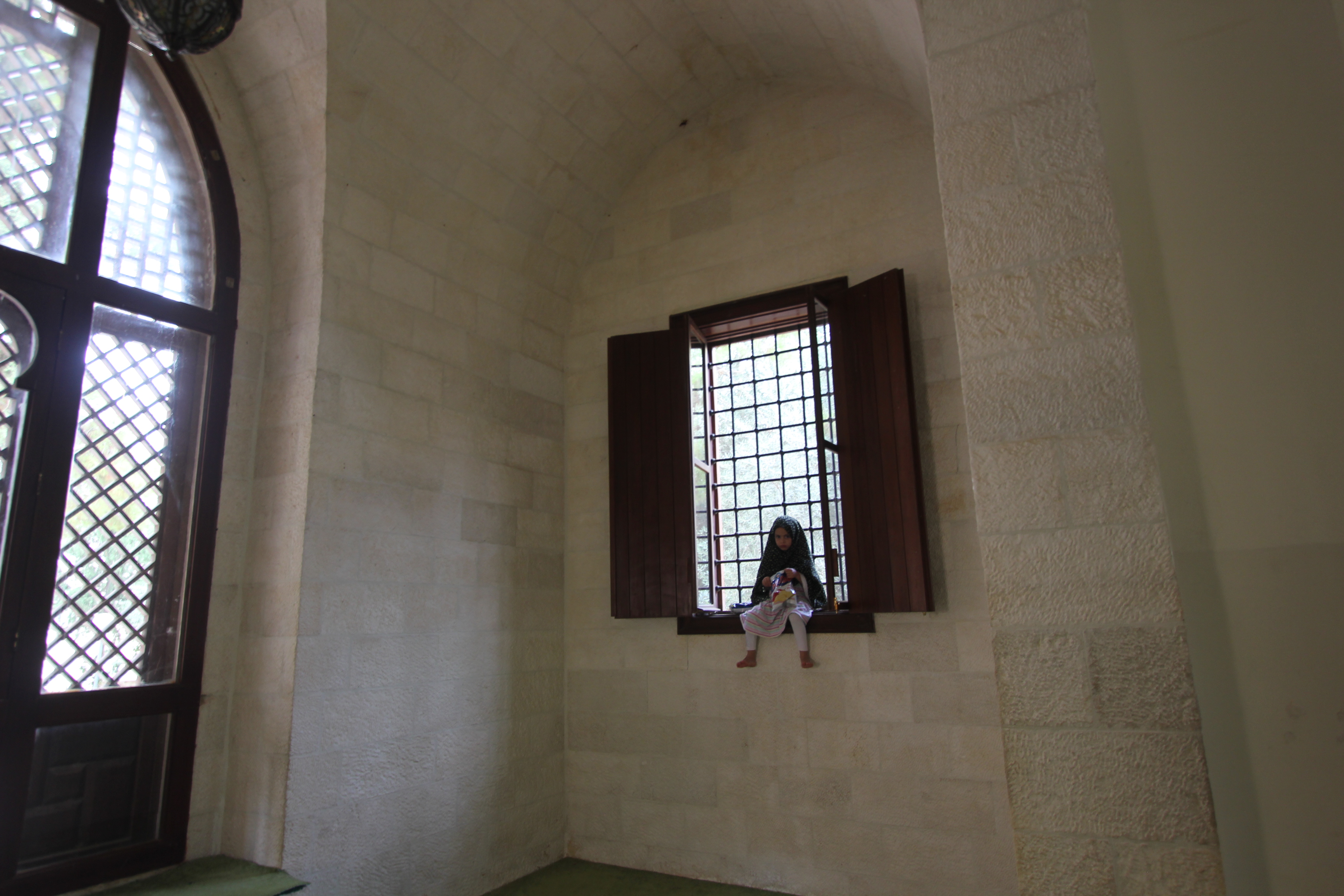
A little girl waiting for her mother's prayers to finish
A little girl waiting for her mother’s prayers to finish

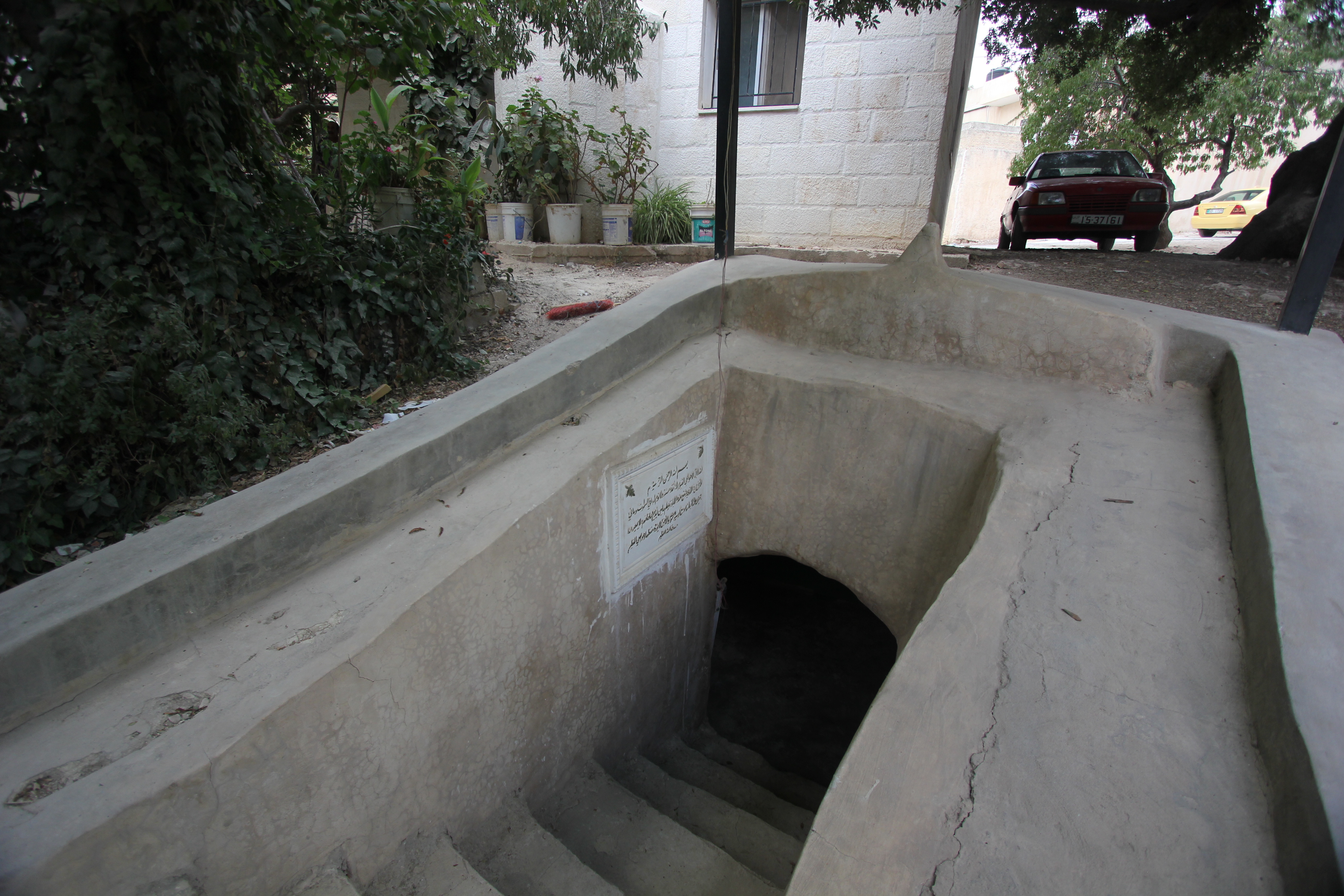
After we have seen all the tombs on the paper, the driver takes me to another tomb and tells me it’s not a Muslim tomb but a Messihi one, of a prophet called ‘Hazeer’. The tomb was hidden under ground, not in a mosque – the most humble one out of all other’s I’ve seen so far and my favourite. I asked him to write down the name of the prophet so I could google it later, but I still couldn’t not find any information on this prophet. If anyone has any information, do please let me know.

Tomb of Hazeer
Tomb of Hazeer
(Top) Message from Noora (Bottom) Tomb of Hazeer
(Top) Message from Noora
(Bottom) Tomb of Hazeer

DAY 4: 21 September 2013, As-Salt

As-Salt: ‘Freedom for Syria’

“Salt: Salt never experienced the intense wave of modernisation that swept across the capital, and as a result has retained much of it’s historic charm”, says my beloved Lonely Planet guidebook.  It is also said to house a number of tombs and shrines of Biblical figures, which makes As-Salt even more irresistible.

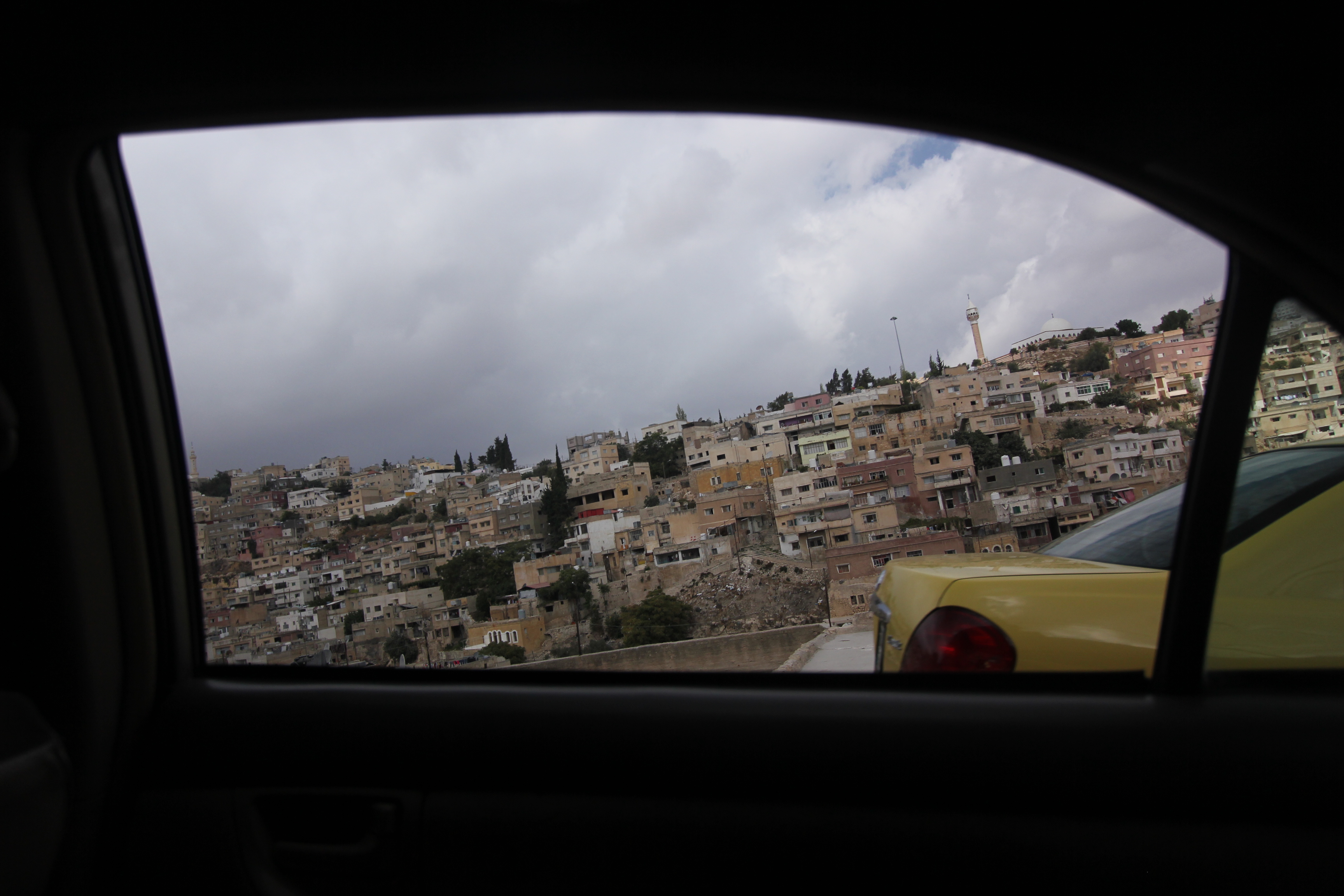
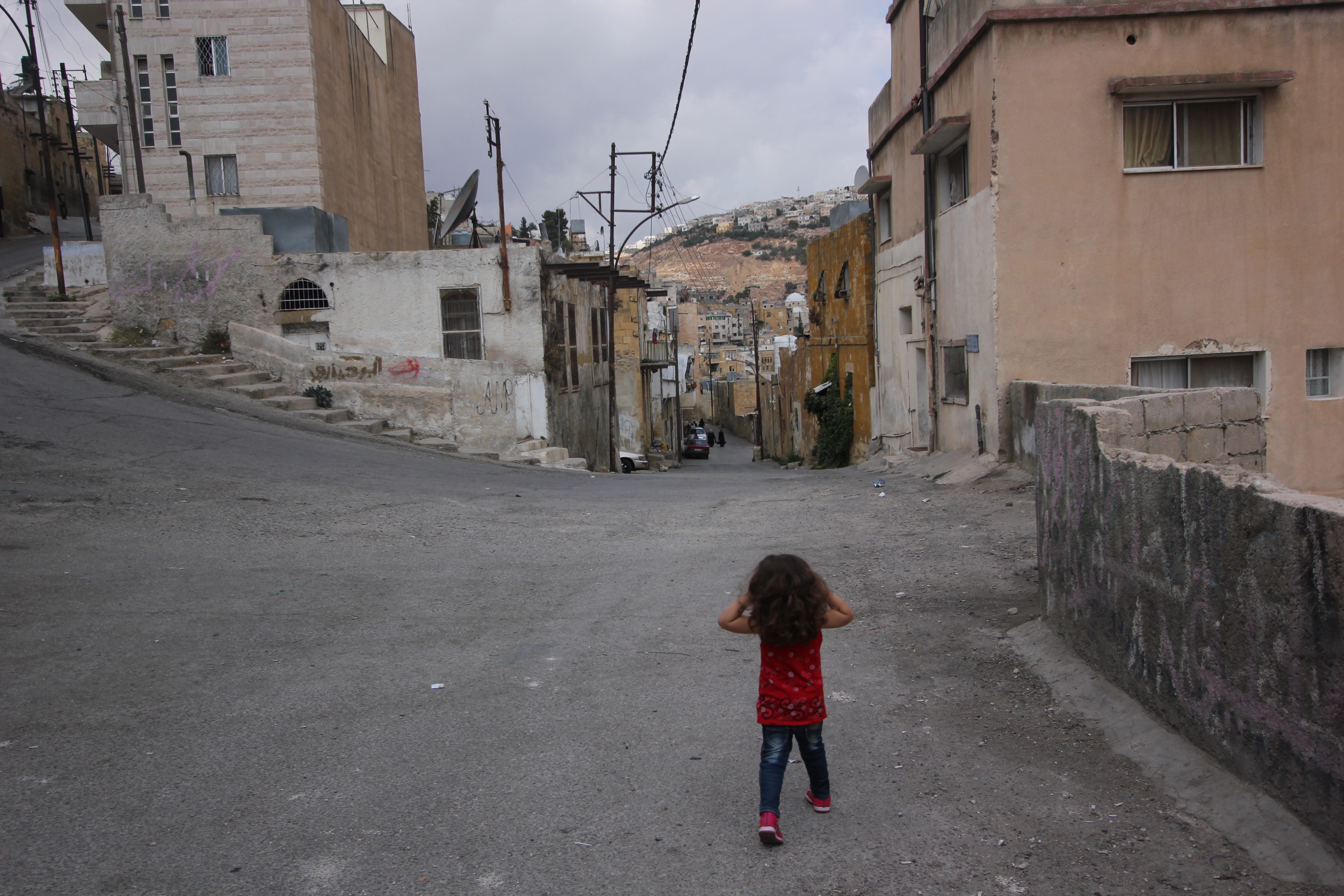
A cozy, idyllic village with stoned pavements was what I had in mind for Salt, which was instantly shattered when I saw an overbearing hill packed with buildings.  I pick a street that seems to be the main road, hoping I would come across any of the tombs, or even better, a tourist centre to pinpoint where the shrines are. The town is surprisingly empty for it’s size and I only come across a handful of kids playing and a few men smoking cigarettes along the way. Before I know it I’m already climbing up the hill, and I am approached by a middle aged lady who holds my hands as if I am her long lost relative.

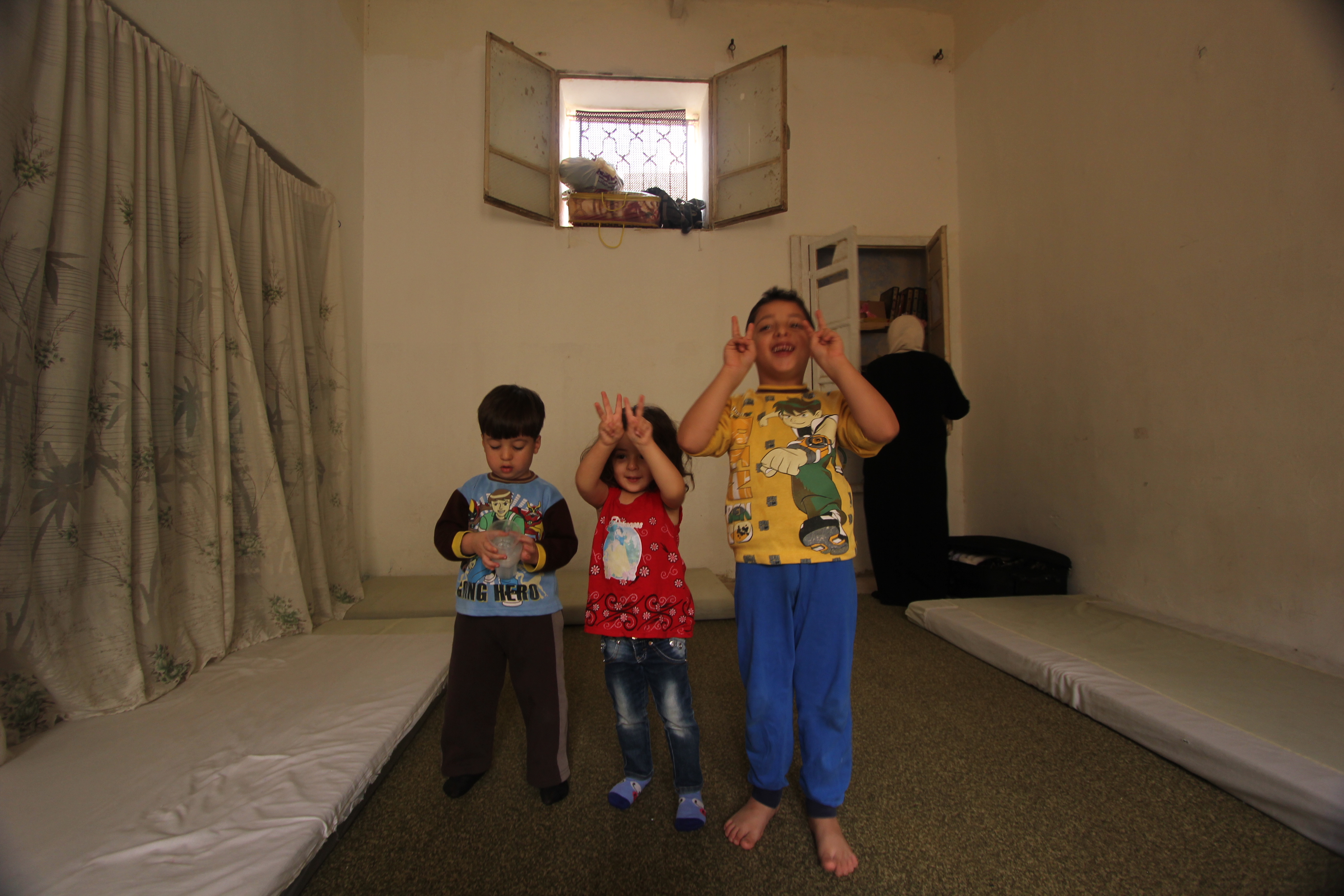
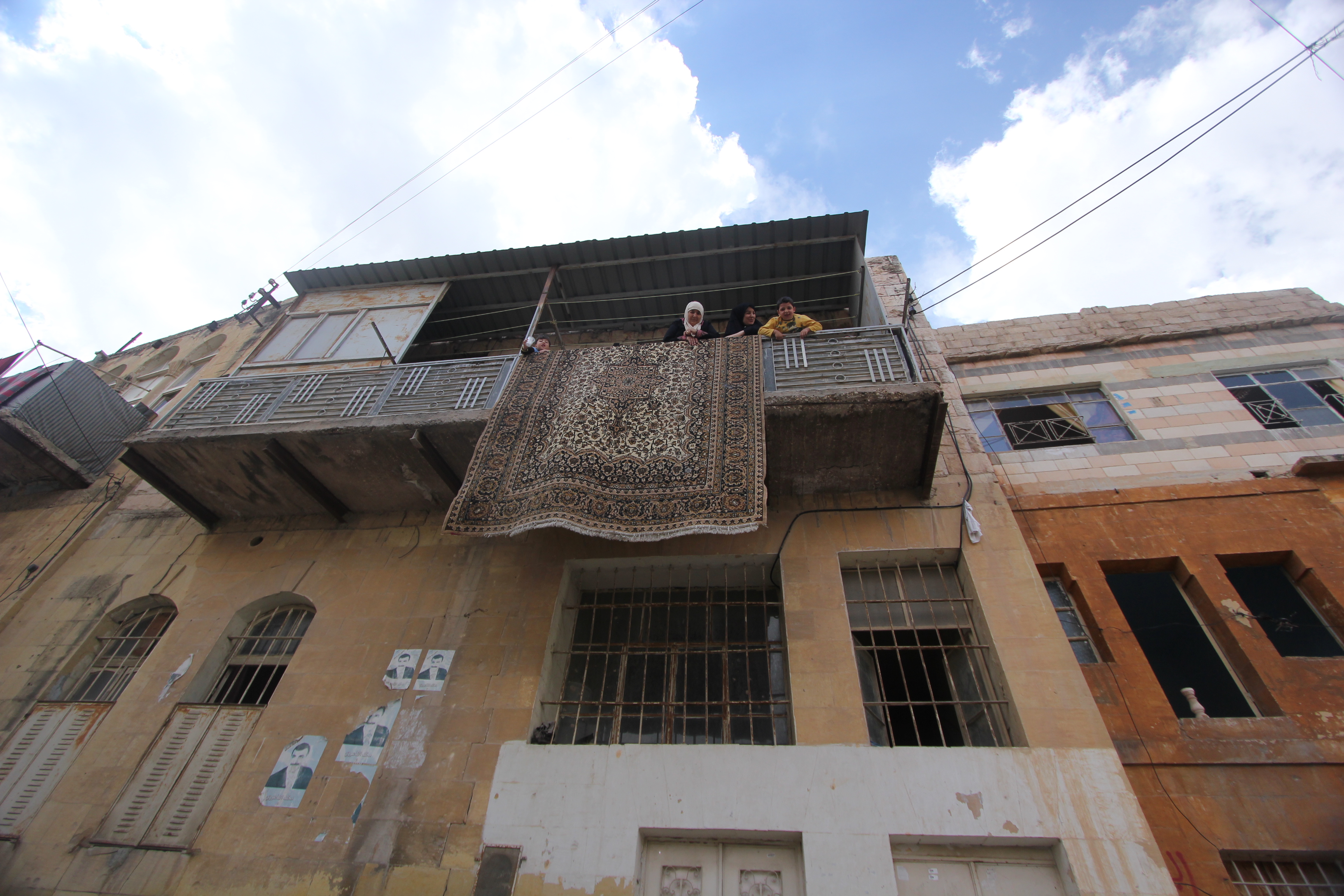
‘Salam alaikum!’ She exclaims and  I greet her back with equally matching enthusiasm followed by the usual perplexed smile all the way through her Arabics. ‘Shai?’ She eventually asks with a gesture of drinking tea, and I eagerly nod my head. I would love for an opportunity to see a real household of a Jordanian. Together we walk up the steep hill, through a narrow door that leads to an even steeper staircase. At the front door, her three daughters who seem to be in their 20s open the door, and three little kids peep through. It the very first time I’ve seen women without a headscarf.  They don’t seem at all startled at this sudden intrusion of a foreigner, and they lead me to a small balcony which overlooks a narrow street. The cool air from the stone floor immediately soothes my face and arms that has been grilled under the piercing sun the whole morning.

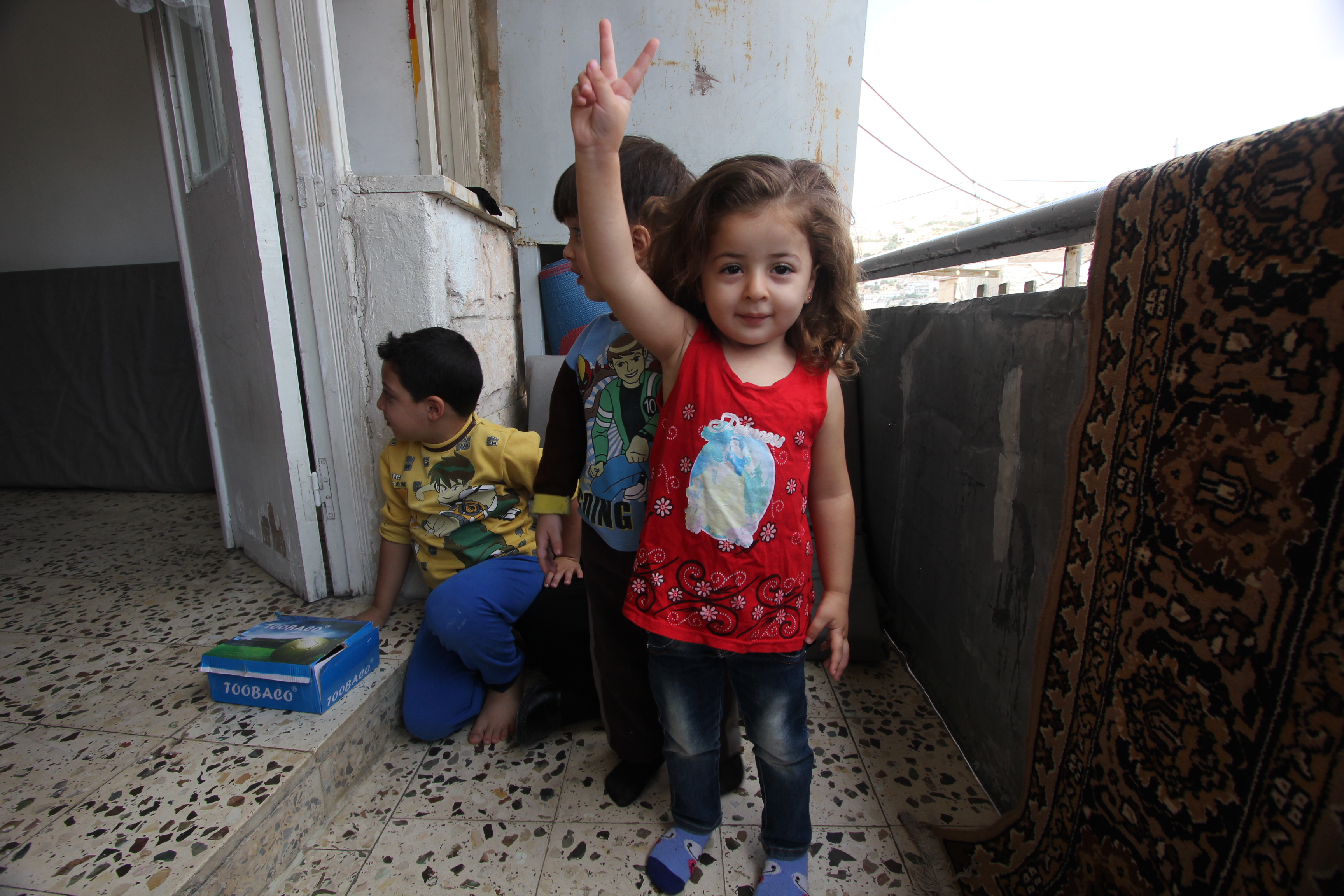
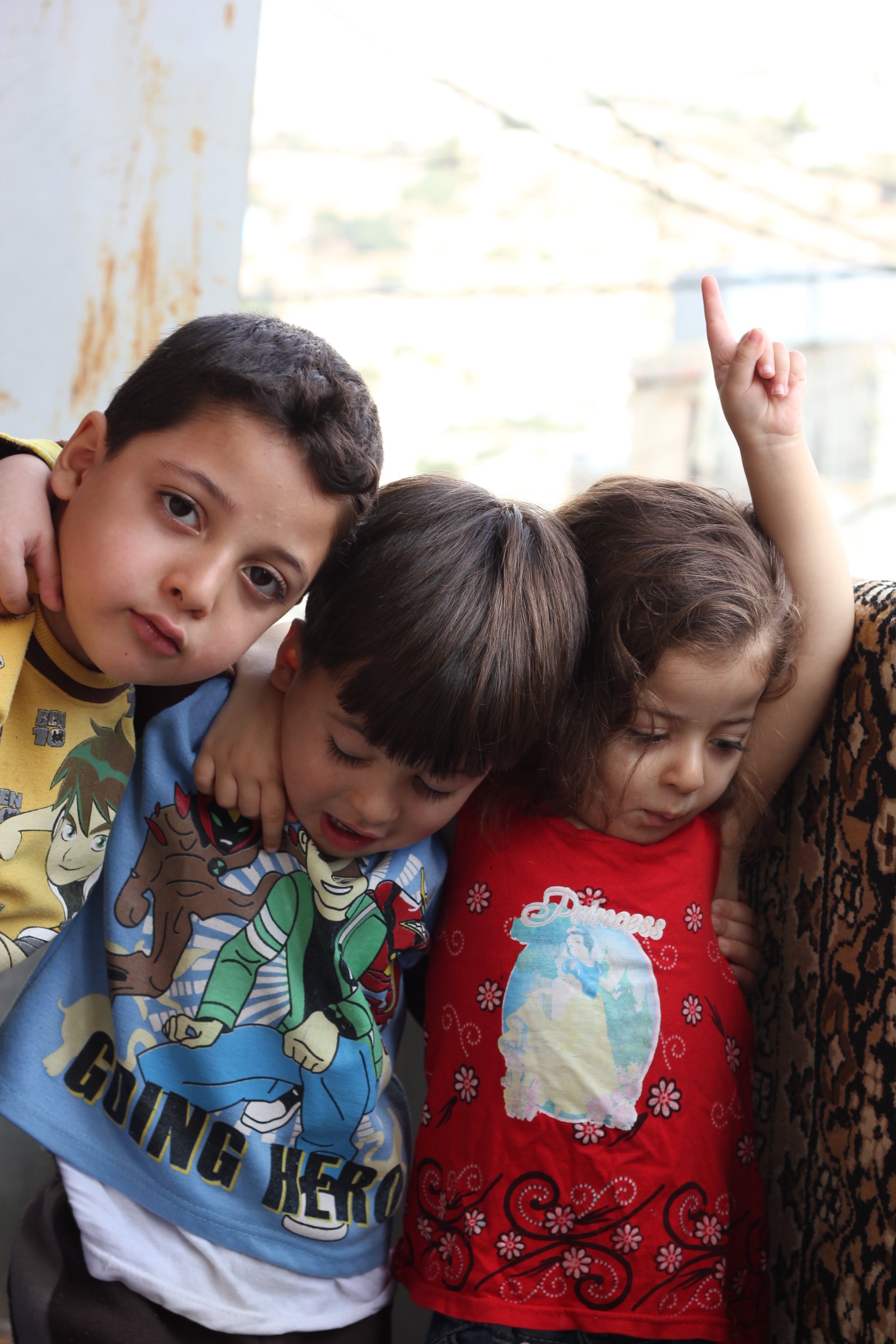
I am led to the balcony to sit, and Auntie (the lady pointed to herself and said what I think is the English word ‘Auntie’) sits opposite. After family introduction, we don’t know what else to say to each other so we simply smile. To cover up the awkwardness, I gesture the children to come to the balcony and start taking photographs. The children instantly hold up their fingers in a ‘V’ shape.

‘We were in Zaatari. We came here one month ago. Angelina Jolie came to Zaatari and took photo with our Farah”. They turn on their laptop and show me the picture – Jolie lifting up Farah, the youngest of the three children, surrounded by many onlookers.  At the mention of Zaatari I light up. I had considered visiting Zaatari on my trip, but abandoned the idea because going there as a tourist seemed somewhat inappropriate. ‘How did you get there? What’s living like? How long were you there for? How easy is it to get out of there?’ Questions after questions are eager to spill out from my mouth, but I see a flash of gloom pass over Aunties face at her daughter’s mention of the place. Perhaps it’s a place with awful memories. I decide not to ask anything. She goes on to tell me that there was a man who wanted to get married to her, but he had died in Syria. 

I think of my Syrian friend Dody back in the hostel in Amman, whom  I have already grown very fond of.  They all have this beautiful untainted smile as if to defy the struggles and heartaches they have known.

‘In Syria, ‘V’ means freedom’. Noora, the eldest of the girls explains as the children never fail to hold up their two fingers every time I click my camera shutter. It is only then I remember – the endless news footages  with all those people in Syria – men and women, young and old – all of them holding out a ‘V’ to the video camera as their country is torn apart. I begin to understand the depth of their yearning in the two tiny fingers held up by a girl who is too young to understand the plight of her homeland.

Noora takes over my camera to take a picture of me and Farah together. I wrap my arm around her little waist, and on my hand glistens a ring that Noora had given me earlier. Farah and I hold our fingers up together in a ‘V’. The gesture is no longer an automatic camera-reflex of an East Asian, but a poignant reminder of my beautiful friends’ pains and a token of hope.

‘V’ is for Freedom. For Auntie, for Noora, for Farah, for Dody.

I whisper silently, Freedom for Syria.

DAY 4: 21 September 2013, As-Salt

View from the balcony

IMG_2118

IMG_2124

IMG_2110

IMG_2149

IMG_2169

IMG_2166

Post script:

Dody’s story has been reported in The New Zealand Herald shortly after I returned from Jordan.

http://www.nzherald.co.nz/world/news/article.cfm?c_id=2&objectid=11135850

As-Salt: ‘What’s your name?’

On the streets of the town of As-Salt, I come cross little children playing.

‘What’s your name?’ I ask.
‘Wat sure nem?’ says one of the boys.

‘Me, Su-Min. You?’ I try again, this time with hand gestures.
‘Mee soomin. Yoo?’ he repeats after me.

I laugh, and he laughs after me.

I turn to the back page of my travel book and carefully read out ‘shoo es mak?’, to which he replies ‘Mohammed’. ‘Shoo es mak? Shoo es mak?’ I ask this to all the children who have now gathered around me.

Unfortunately, my glee and pride at this conversational breakthrough doesn’t last long when Mohammed carries on asking me questions in Arabic, to all of which I have to read out ‘maa fa he met (I don’t understand)’.

DAY 4: Saturday, 21 Sept 2013. As-Salt

Hashemiyeh Street in Amman

“I give you five camels for marriage!’, jokes Abu Josef in Arabic which is swiftly translated by Uncle Sam.

Abu Josef owns a street stall selling antiques on  Hashemiyeh Street. While the majority of the shops on this street offer commercially manufactured souvenirs arranged in its categories, Abu Josef’s stall is cluttered with everything old everywhere. Plates, old cameras and pouches on the table; necklaces and beads hanging from the top; copper tea pots and cups laying on the ground.

I bought a defunct Iraqi dinar note with Saddam Hussein printed on it, got invited to have tea by Uncle Sam, so here I am sitting by Hashemiyeh Street listening to Abu Josef talk on and on.

“Five camels! No, no, ten camels for you!”

It’s been only five minutes since the unpleasant touch-ups at the fruit souq, but I’m already feeling light-hearted at this characterful old man. He is a small, thin man with a tight voice, and is quick to raise his voice  whenever Uncle Sam stumbles at his translations. Uncle Sam, in comparison, is a well built middle aged man with a soothing gentle voice. He has a calming presence and seems like a deep thoughtful person, so different from Abu Josef who chatters on with all sorts of flirtatious comments.

“If you give me five camels, I give you five babies! If ten camels, it’s ten babies!” At my banter Abu Josef comes back with, “A Jordanian/Korean baby will be beautiful! Korean eyes and Arab moustache! Arab moustache and Korean eyes! So beautiful!”

Just imagine that – a baby with tiny slit eyes with thick Arab moustache. God forbid.

This slideshow requires JavaScript.

DAY 3: Friday, 20 Sept 2013. Hashemiyeh Street, Amman.

Fruit Market in Amman: “She thinks I want to f*** her”

I’ve been in Amman for three days already but haven’t been any parts of the capital city yet. So after a quick simple dinner (spicy pasta, 3JD) I set off exploring the Friday nightscape of Amman. The streets are filled with the excitement of a weekend night, and endless rows of cars and taxis honk in a steady rhythm in celebration.

Feeling I’ve been lacking in the intake of Vitamin C, I head for the fruit market, hoping to buy a bag full of fruits to snack on during my 4 hour long bus trip to Aqaba tomorrow. I stop by each stalls, but all the vendors refuse take payment from me, preferring to give me samples of each fruit instead – pear, lime, fig, honeyed date.. They are either too sweet, too sour, or too bland for my taste but I dutifully finish them all.  Before I know it, I am sitting on a barrel that one of the vendors have offered me, this time a quarter of pomegranate in my hand. The vendor who has invited me to sit next to him is an old man, and I feel like a girl receiving treats from her granddad every time he peels a different kind of fruit and places them in my hand.

It seems a young man with stubbles is the only one who can speak English, and he tells me anecdotes about each vendors – and he likes to use f word often.

“That guy over there, he used to have a Filipino wife. He likes to f*** Philippine girls” “F*** America. It’s a bad country. Syria is f***ing America, North Korea is f***ing America. It’s good”

He wants to take a picture with me, and as he sits next to me and pose at the camera, he puts his arm around my neck. His hand ‘happens’ to be placed over my chest, and he even dares to slightly cup his hand.  I stand up making some excuse about having to go back, and the old vendor puts his arm behind me as if to guide my way out protectively, but his hand is on my ass.

The young man offers to walk me back to the hostel and I say ‘it’s okay’, and he announces to everyone, ‘she doesn’t want me to come with her because she thinks I want to f*** her!’, as if telling a great joke. Everyone cheerily laughs and I laugh along with them, but I’m actually in a sour mood. I walk away with an unfinished pomegranate in my hand, with my back turned towards the old vendor who has cheekily asked if I could give him a kiss goodbye on his lips.

This slideshow requires JavaScript.


‘Where are you from?’ – It’s how all the conversations begin here in Jordan. Usually followed up with something like, ‘Ah! Korea! Korea good! Samsung good!’ or ‘Are you married? Have a boyfriend?’. It’s a question of which the content of the answer has no significance at all. I might as well be a Venezuelan or a Congolese and the conversation would still have gone in the same direction –  apart from today.

I walk through the Colonnaded Street to come out of the ruins of Jerash with mixed emotions. Flustered, angry, guilty, upset and very hungry. Not having the energy to browse for the shops that offers the cheapest lunch, I walk into a spacious restaurant I see in front of me. Let them rip me off if they will.  When order a sandwich to take away (priced at 3 JD, which is roughly about £3), and the man who took my order asks me the question. ‘Ah!’ A light sparks in his eyes and says something hurriedly to a boy next to him. The boy runs off somewhere and soon comes back with a young Jordanian man.a

‘안녕하세요, 저는 한국말 공부합니다 (Hello, I am studying Korean)’, slowly but flawlessly he speaks to me.  A big smile floods my face and I become animated, bombarding him with questions after questions. Where does he learn Korean? Why? How long?

The restaurant is a family run business and he was one of the owner’s nephew, and I am suddenly treated like their family friend.

‘Come inside! Come! Come!’ I am ushered into a room inside the restaurant, and takes only 1 JD for the sandwich I ordered. I tell him I want to buy a bottle of water, and he gives it to me for free. Another man in the restaurant gives me a CD that has photos of key sites in Jordan as a present and a bottle of coke is on the house.

IMG_1856

‘How can I get to Ajloun and Mar Elias?’ It is Friday so I have to rule out public transport. The man at the restaurant makes a couple of calls, asks around people around him and eventually leads me to a table at the back of the restaurant an Asian man and his Jordanian driver are having lunch. ‘They are going back to Amman today so maybe you guys could travel together and share the costs’.

This is how I met Masato, a very easy going, mischievous Japanese man who also happen to speak Korean fluently. We are soon listing Korean/Japanese music bands and TV programmes we both know, and bam! We’re now friends travelling together. He was happy to visit  the Ajloun castle and even come along to the Mar Elias, which is a site visited by Christians and Muslims.

We fill the rest of the afternoon being typical Asians – clicking away with our DSLRs, triumphantly holding out our ‘V’s with our fingers at each photos, and of course, singing PSY’s Gangnam Style in the car.

DAY 3: Jerash/Ajloun/Mar Elias, Friday 20 Sept 2013

Jerash: Not so Arabic style

Today’s plan:  Jerash and Elijah’s birth place in Ajloun (Mar Elias).

Transport is scarce on Fridays in Jordan so the North bus station was unusually empty. I sat on a bench with Susanne, a Dutch girl staying on the roof of the hostel, and simply waited. Not knowing when the next bus would arrive, we just sat, reading our books. It didn’t matter what time it was, or how long we were there for.  Falling in to the natural rhythm of time as it flows without keeping track of it’s rigid unit of 30 minutes is a bliss of travelling. Time stops tick tocking  and I find rest in it’s silence.

On the bus to Jerash, our conversation turns to feminist issues: How does it feel like to be covered up in public spaces? Does our freedom to reveal however much we want in the West cause sexualisation of women to be more overt?

The proportion of women walking around on the streets of Jordan is visibly much lower than the number of men, and the amount of attention we draw as foreign women made me very conscious of my identity as a female and the dynamics between different sexes. Women may have a quieter role in the society here, but men in return seems to assume more of a protective and responsible role than the men in the West. It made me rethink about my ignorant tendency to equate such cultures with gender inequality that needs transforming.
IMG_1818

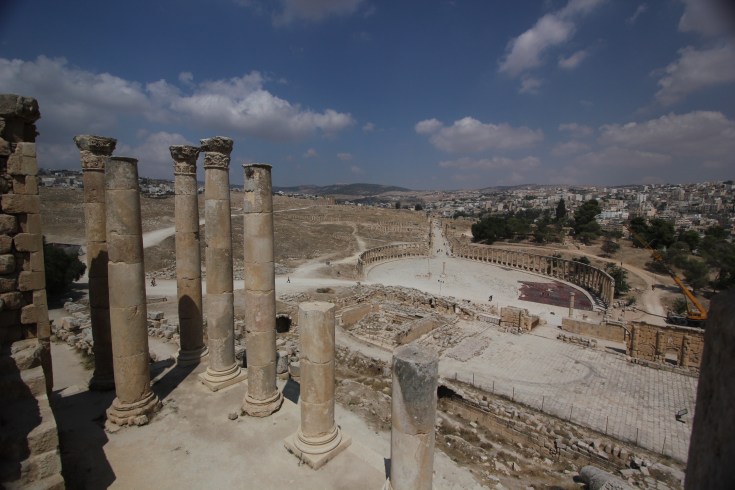
Jerash is one of the Middle East’s best examples of a Roman provincial city, comprising a collection of triumphal arches, amphitheatres, a hippodrome and temples. Susanne decides not to go in so I enter by myself. It is so much bigger than I expected, and I find it a chore dipping my head into my travel book to read about each ruins when I would rather spend my time taking in the ancient view. ‘I would love an audio guide’, I think to myself. Then, as if by magic, a young boy approaches me and asks, ‘Do you need a guide?’. He seems very young and there’s no way of telling whether he’s a real guide or not. In his Arabic accent he carries on talking. ‘Moving columns, goats, lions, empty stones – I tell you all about. You know moving columns? I tell you all’. Moving columns? Goats? I can’t make out what he’s trying to say from what seems to be a random collection of words, and his thick Arabic accent adds to my suspicion that it’s a scam.

I say ‘no thank you’ but he still takes me to a nearby ruin anyway. ‘Here, the view is really good’, and he climbs up the stairs inside a small, insignificant tower nearby. The view IS really amazing and at this I decide to put a little faith in him.

The boy really knew his stuff. He shows me how the columns were designed to move a little, and the stones on the buildings are hollow so that they would make a sound when they clash into each other – so that one would know when there was an earthquake and the buildings are less likely to collapse.  He shows me where people used to sacrifice animals and a stone with knife marks on them and  and where all the meat used to be stored.
IMG_1824

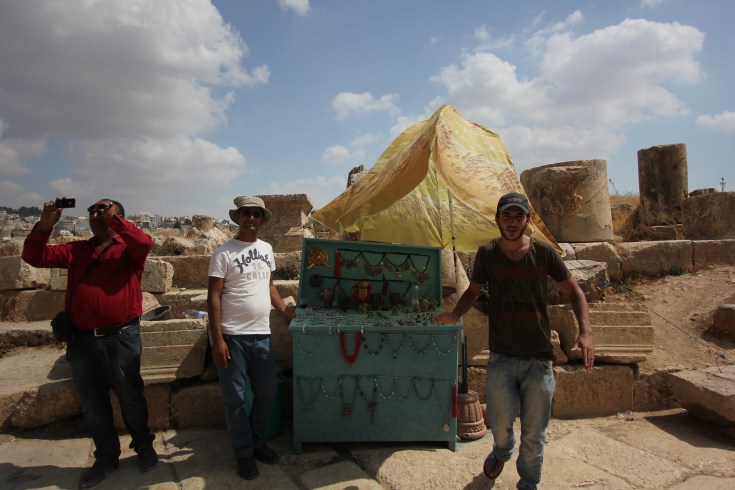
He knew all the people working in Jerash, so we stopped by a vendor and chatted a little. I bought two silver bracelets for 10 JD, which the vendor told me were from Jerash (I later found Chinese letters engraved on the bracelet, and they were being sold in Petra for 3 JD). Mohammed, my guide, picked up a green bead necklace from the stall, said something to the vendor in Arabic and gave it to me saying it was a gift. He told me the stones were also from Jerash, and then took me to a nearby stone all covered with brown sand. When he splashed some water on it, the stone revealed its true colour of deep green, the same colour as the necklace. As we were about to leave, Mohammed picked up another jewel from the stall and said, ‘it’s my gift to you’.  I found it a little uncomfortable to accept another gift from a stall that isn’t even Mohammed’s so I discretely put it back where it was. The vendor saw this and told me to take it.

To say thank you, I handed Mohammed a lemon sherbert I had bought in England to give to people Jordan but he refused.  When I asked why he said it would make him want water all the time. So put it in my mouth instead for some energy perk up (I had no lunch and was starving), but soon spat it out. It was as if the sweet sucked all the moisture in my mouth and I couldn’t stand the thirst it created. It dawned on me why many had declined the sweets when I had offered it to them.

It was a windy day, and wearing a flared skirt was not a good idea at all, as the moment of misfortune finally came with a gust of wind and.. well, you can imagine what it did to my skirt.  More unfortunate was that Mohammed happened to be at the bottom of the stairs looking up at me, just at that moment.

‘This is the end of the tour’, he says when we are at the Temple of Artemis. ‘Can I have a kiss?’ You can have your money back’.  Just a few minutes ago he wanted me to pay him much more than what we had agreed on (and I did end up paying him much more as I felt he was that good), and now we wants a kiss instead. First he asks for a kiss on the lips, and asks to kiss me on my arms and my legs. At my constant refusal he changes his tact. ‘Ok, we just say goodbye in Arabic style’.  I naively believe he’ll let it go after a kiss on my cheek, but no, it’s my neck he goes after.

‘That’s not Arabic style!’ I still have my smiles on, hoping to be polite.

‘Ok, we’ll just take pictures together then’. He gets his phone out and sits on one of the stones. He purposely leaves a little space next to him and gestures to me to sit on his lap. I make him move over.

‘Why can’t I kiss your legs?’ ‘Can I kiss your arms?’ He asks again and I finally snap at this never ending insistence. I get up and announce, ‘I’m leaving now’.

He follows after me, his eyes desperate and even looks a little hurt by my sudden rush of anger and determined refusal.

‘I’m so sorry. I’m too hot for a girl.’ He takes out the money I had given him and tries to give them back to me.

‘No, don’t do that’

‘Just one kiss, please’.

I’ve just had enough. Without replying, I just walk off. He follows.

‘Give me high five’, he says. ‘No!’ My voice is high with irritation. ‘Just a high five’. He puts his palm out to me. Awkwardly I high five him and we both walk off in separate directions.

I hate leaving on bad terms with people, even if it’s with someone I will never see again. Unfortunately, he wasn’t the only person I ended up storming off from during my travels in Jordan. 


DAY 3: Friday, 20 Sep 2013


More pictures of Jerash: http://www.flickr.com/photos/104035608@N03/

Rounding off Day 2: Handful of yellow beans, a rejected shwarma and the self conscious white pudding.

IMG_1761

It is nearly 6 pm when I come back to Madaba after visiting Bethany Beyond Jordan. A young man from the Peace souvenir shop had offered to take me back to Amman in his car when I was having lunch there earlier on, but I ask the taxi driver to drive me to the bus station directly. I’m not sure whether his invitation was out of friendliness or hoping for something more, but either way I didn’t want to get into a car with someone I have known for 30 minutes.

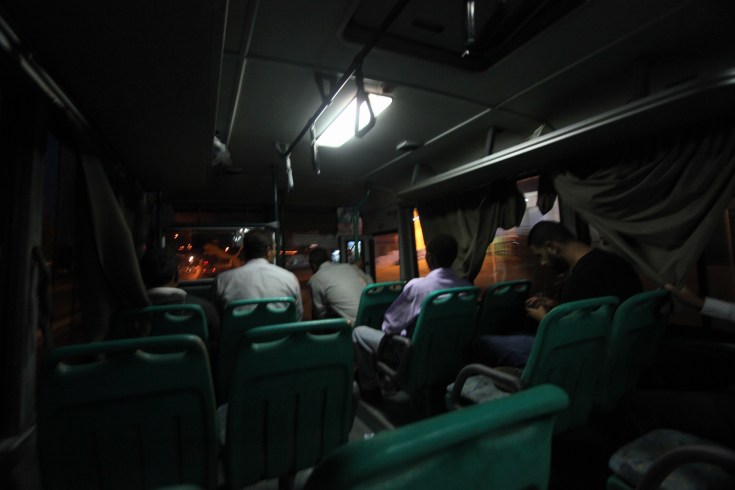
The sun sets as the bus makes its way from Madaba to Amman’s North Bus station. In my fatigue, everything seems to be slowly moving through an invisible jelly – the bus, the traffic, people getting on the bus….. Half awake, half dozing off, I watch the sky turn from grey blue to jet black, and how city lights grow brighter and busier as we approach Amman.

IMG_1763
Madaba bus station

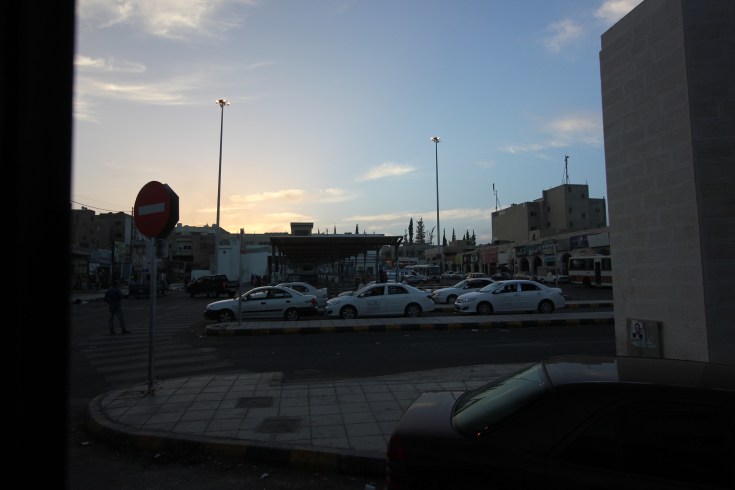
It’s late in the evening, so the North Bus station is empty when we finally arrive. When I am about to call a taxi to take me back to the hostel, four or five men surround me. ‘Where are you going? No taxi, no taxi. Bus. Free. Come! Bus!’ They put me back in the bus I just got off.

As the bus drives away, the men ask me a few questions in broken English, give me a handful of sour tasting yellow beans (I think) to eat, and just as quickly as I was whisked onto the bus at the station, they drop me off in the middle of a busy roundabout and drive off. I have no idea where I am.

Assuming they dropped me off somewhere closer to the Amman downtown, I get a taxi from there. The driver is an old man, who finds it very amusing that I am travelling by myself without a male company. ‘Do you want to eat dinner with me? I pay for you. You like shwarma?’ On and on he keeps asking.

IMG_1794
Bus to Amman


After quick dinner at my hostel, I take a walk to the street food shop that the Crazy Girl recommended. The small square shop is tiled everywhere, and has nothing in it apart from a stainless steel table, giving it a very cold clinical look under the bright fluorescent light.  It is outside the shop that they have set up a counter to sell two things: white drink and white pudding. A kid at the counter scoop up a big ladle of the white stuff into a glass bowl, sprinkle some honey and dessicated coconut on top and hands it to me. I wanted it in a paper cup to take back to hostel, but now I’m stuck with this on the busiest street in Amman with nowhere to sit.  So I just stand there and eat.

A group of teenagers stop by the shop and order a couple of bowls as well. They stand a few steps away from me and stare at me with curiosity peppered with occasional giggles. People in the car peer out the window and some even honk their horn. Another group of men appear and keeps calling out ‘Hey, China!’.  None of the stares are nothing close to an unpleasant leer – just pure curiosity.  Nonetheless I become intensely self conscious and the T-shirt and over-the-knee skirt I am wearing feels way too skimpy. Forget savouring the exotic Jordanian street food. I gulp down the whole lot and rush back to the familiarity of my hostel.


DAY 2: Thursday, 19 Sept 2013

Create a free website or blog at WordPress.com.

Up ↑